
Featured
UI Library
Personal UI Library
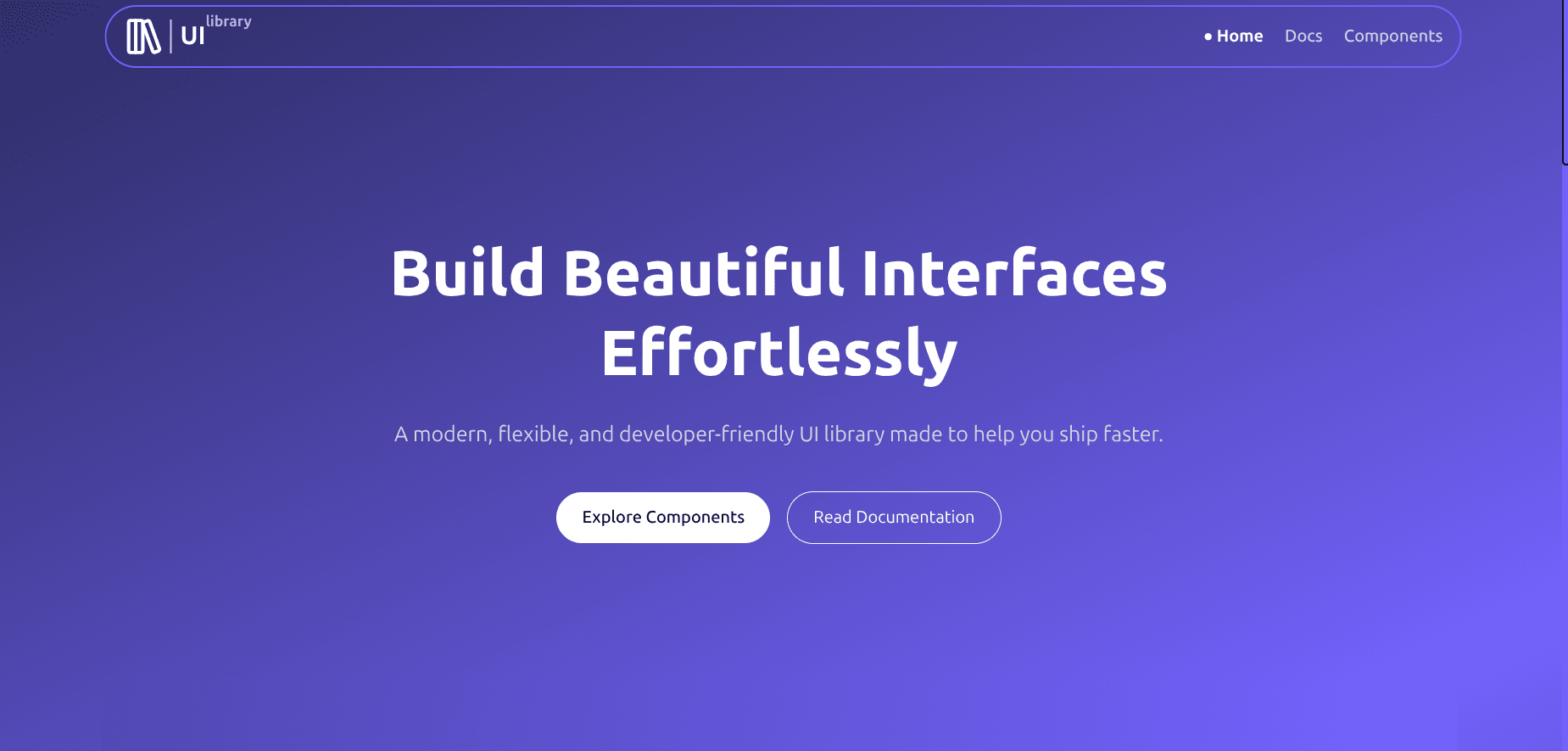
Personal UI Library is a carefully crafted collection of reusable React components designed to accelerate frontend development. Built with Next.js, TailwindCSS v4, ShadCN UI, and Radix UI, it emphasizes simplicity, accessibility, and ease of integration. The library includes form components with Zod validation, smooth animations with Framer Motion, and fully responsive layouts. It is ideal for developers looking to maintain consistency and speed up UI development across projects.
Project Information
Role: Frontend Developer
Team: Solo Project
Duration: 2 weeks
Year: 2025
Tech Stack
Next.js
React.js
React Hook Form
TailwindCSS v4
ShadCN UI
Radix UI
Zod
Framer Motion
Key Features
- Customizable buttons, inputs, modals, and other UI components
- Form handling with React Hook Form and Zod validation
- Responsive grid and layout components
- Lightweight animations with Framer Motion
- Accessible and keyboard-friendly components
- Easy theming and customization via TailwindCSS
My Responsibilities
- Designed and developed reusable UI components for rapid integration
- Implemented responsive layouts and accessibility features
- Integrated form validation with React Hook Form and Zod
- Added smooth animations using Framer Motion
- Maintained consistent theming and design using TailwindCSS v4 and ShadCN UI
- Documented components for easy usage across projects
Advantages
- Reusability and modularity of components
- Ease of integration into Next.js projects
- Pre-configured form handling and validation
- Responsive and accessible design
- Lightweight and optimized for performance
- Supports modern frontend stack
Challenges
- Ensuring accessibility compliance across all components
- Maintaining consistent design patterns
- Integrating multiple libraries (ShadCN UI, Radix UI, Framer Motion) seamlessly
- Optimizing bundle size while keeping flexibility
Solutions
- Followed Radix UI accessibility standards
- Created TailwindCSS utility classes for consistent styling
- Leveraged modular component architecture
- Used dynamic imports and tree-shaking to reduce bundle size


